Picture the Monday your content calendar finally wins. Four blog posts are due. A newsletter that should have gone out Friday is still a draft, and your paid team keeps pinging you about an ad set that doesn't exist yet. You open a blank document, and the cursor blinks back at you with all the patience in the world.
That blank page is where most content time disappears. Not in research. Not in strategy. In the slow work of turning a rough idea into a first draft you're willing to show someone.
This article walks through a repeatable way to shrink that work. You'll see the exact workflow I use, the prompts that drive it, plus the point where redeepseek does the heavy lifting so a post that used to eat an afternoon takes closer to an hour. The method comes first and the tool comes second, so you can borrow the process today even if you never sign up for anything.

Where the hours actually go
Marketers rarely lose time to typing. They lose it to starting.
Every format has its own version of the stall. A blog post jams at the outline, when you're staring at a topic with no idea what the first section should argue. An email jams at the subject line and the opening sentence, the two lines that decide whether anyone reads the rest. Ad copy jams at variation, because one headline is easy and the dozen you need for honest testing are not.
Add these up across a week and a shape appears. Writing itself is quick once momentum exists. Manufacturing that momentum is the expensive part.
I timed myself on this once, out of pure stubbornness. Forty minutes to write eight hundred usable words. Fifty-five minutes before that spent deciding how to open the thing. The writing was never the bottleneck. The staring was.
A second cost hides underneath the first. When you push through a draft under deadline pressure, quality quietly slips. You ship the third-best headline because you ran out of time to find the best one, then tell yourself it's fine.
Speed and quality start to feel like a trade, and most teams accept losing a little of both. The workflow below refuses that trade, and the rest of this piece is how it works.
The four-step workflow that makes speed repeatable
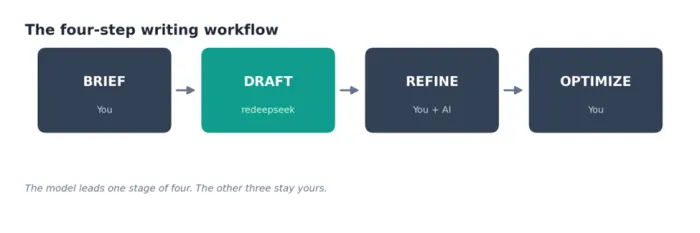
Fast writing isn't a talent you're born with. It's a sequence you run the same way every time, where each stage hands clean input to the next.
| Stage | What happens in it | Who leads |
|---|---|---|
| Brief | You set the reader, the goal, the angle and the tone before any AI touches the work | You |
| Draft | The model turns that brief into a full first pass in seconds | redeepseek |
| Refine | You cut the generic parts, sharpen the argument, and rewrite what falls flat | You + AI |
| Optimize | Heading structure, keyword placement, internal links, a last read for rhythm | You |
Step 1: Write the brief (5 minutes, you lead). Note four things before any AI touches the work: who the reader is, what they should do by the end, the keyword or angle, and the tone. Skip this and every later stage inherits the vagueness.
Step 2: Generate the draft (seconds, redeepseek leads). Paste the brief in, then pull the first pass section by section. Raw clay, not finished work.
Step 3: Refine (you and the model). Cut the generic lines, sharpen the argument, ask the tool to rewrite what falls flat. This stage decides whether the piece sounds like you.
Step 4: Optimize (you lead). Fix heading structure, place your keyword, add internal links, read once for rhythm.
Look at the "who leads" column again. The model runs one stage out of four. That ratio is the reason this method produces work worth publishing instead of filler.
Compare two briefs for the same post. "Write about email deliverability" gets you a soggy encyclopaedia entry. "Write for a founder who just watched open rates crater, lead with the SPF fix, keep it under 1,200 words, sound like a smart friend rather than a manual" gets you something close to publishable. The second brief took fifteen extra seconds to type.
Writing blog posts faster
Let's run a real post through the sequence, starting with the format that eats the most time.
The assignment: a 1,500-word post on email deliverability for a SaaS blog. The old way, you'd research for an hour, outline for thirty minutes, then draft for two hours before your first real edit. Here's the compressed version.
- Prompt for the outline.
- Trim and merge sections.
- Draft one section at a time.
- Run the refine passes.
Open redeepseek and hand it the brief as a single prompt. Something like this:
Write a detailed outline for a 1,500-word blog post on improving email deliverability for B2B SaaS founders. The reader is technical but time-poor. Angle: the five settings that matter most. Tone: direct, no fluff.
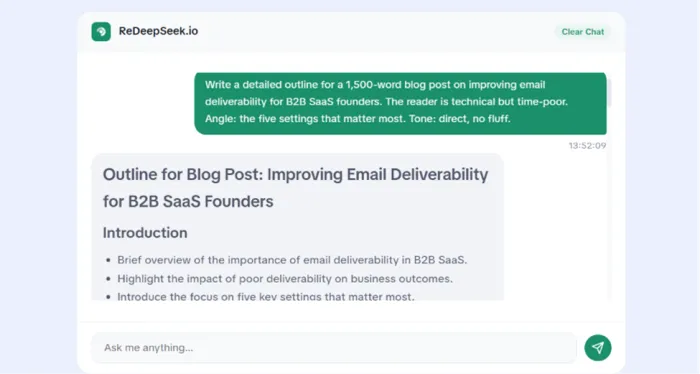
Seconds later you have a structured outline. Mine came back looking roughly like this:
• Why deliverability quietly kills good campaigns
• Setting 1: SPF, and the one line most people get wrong
• Setting 2: DKIM (DomainKeys Identified Mail)
• Setting 3: DMARC, and why a "none" policy is costing you
• Setting 4: list hygiene and a sunset policy that works
• Setting 5: the engagement signals inbox providers actually watch
• A 15-minute audit you can run today
You'd trim one of those, merge two, then ask for the draft of section one only. Working section by section keeps quality high, because the model stays focused instead of spreading itself thin across 1,500 words in one go.
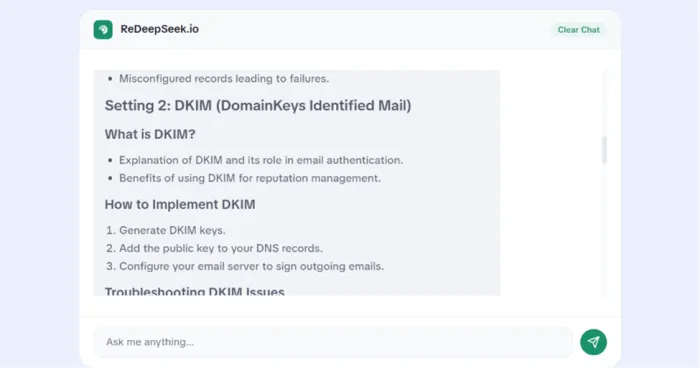
The draft won't be perfect, and it isn't supposed to be. What you're holding is an hour of drafting done in ten minutes, ready for the refine stage. The afternoon you just saved goes back into the thinking only you can do.
Here's the refine stage in miniature. The model handed me this opener: "Email deliverability is an important topic for many businesses." Dead on arrival. Ninety seconds later it read: "Half your cold emails may never reach an inbox, and your SPF record is usually the reason." Same idea, sharpened into a line a founder keeps reading.
Writing emails faster
Email flips the ratio. A blog post is long and structural; an email is short and psychological, where one line can make or break the open.
- Request the subject lines.
- Request the body.
- Split-test before you roll out.
Take a re-engagement email to trial users who went quiet. The stall points are the subject line and the first sentence, so aim redeepseek straight at them. Ask for fifteen subject lines across four registers: curious, blunt, warm, urgent. You'll read all fifteen in twenty seconds and recognise the one that fits.
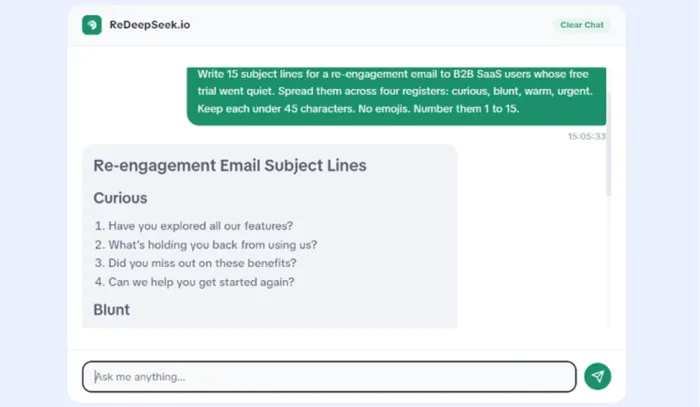
A few of the lines it returned for the lapsed-trial email:
• “Have you explored all our features?”
• "Your account misses you (here's what's new)"
• "Did you miss out on these benefits?"
• "The feature you asked for just shipped"
• "48 hours left on your saved workspace"
You can feel the registers pulling in different directions, and that spread is the point. One matches your brand voice; the rest get discarded in seconds.
Then request the body. Keep it short, one clear ask, a link back to the product. The model returns a clean version fast, and your job is to add the detail it can't know: the feature you shipped last week, the reason this specific person signed up in the first place.
The finished body stayed lean:
Hi Sam, your workspace is still saved, and we shipped the bulk-import you flagged back in March. Want your 30 days back? One click and you're in.
Send that to a slice of the list first, watch the open rate for a day, then roll the winner out to everyone. The tool built the options; your audience picks the champion.
That editing pass takes a minute, and it's the difference between a message that reads as automated and one that reads like a human remembered you existed. We'll get into that editing skill next, because it carries across every format.
Writing ads faster
Ad copy is where the time savings compound hardest, because good testing demands volume. One clever headline isn't a campaign. A campaign is ten headlines tested against three descriptions, and writing all of them by hand is where the afternoon dies.
- Describe the product and the lead benefit.
- Request the variations.
- Build the test matrix.
This is redeepseek's home turf. Ad-focused AI trains on large volumes of real ad data, which lets it predict the headline and description patterns that tend to earn clicks. Describe your product and the single benefit you want to lead with, name the audience in a line, then ask for twelve headline variations under thirty characters plus six longer descriptions.
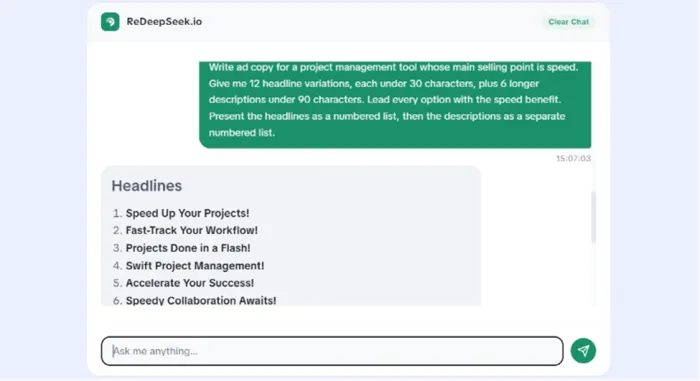
A slice of what came back for a project-management tool leading with speed:
• "Speed UP Your Projects!"
• "Your team's busywork, gone"
• "Plan Monday in 5 minutes"
• "Deadlines that stop slipping"
Four usable angles in one pass, and you asked for twelve. Now you're staring at a test matrix instead of a blank ad manager. Cut the weak options and keep the eight with the sharpest angles. Drop those straight into the platform or hand them to your paid team.
One structure keeps the test honest. Pick your two strongest headlines and pair each against the same two descriptions, holding everything else steady. Four combinations, a single variable moving. That discipline turns a pile of copy into an answer you can read straight off the dashboard.
One caution before you get excited. The tool gives you options. It doesn't tell you which one wins, and only your click data can do that. Treat every variation as a hypothesis and let the numbers settle the argument.
How to keep the writing from sounding generic
Here's the stage I promised to come back to. It's the one that separates content that ranks from content that gets skimmed and forgotten.
The weakness of any AI draft is sameness. The models reach for the same sentence shapes and the same safe claims, and they dodge taking a real position. Publish that raw and you dissolve into the wall of identical posts already fighting for your keyword.
Four habits fix most of it.
1. Take a side. A generic draft hedges. Walk through it and make it commit. Where the model wrote "there are several ways to improve deliverability," change it to "authentication settings matter more than send frequency, and here's the proof." A clear stance is memorable and worth linking to.
2. Add what the model can't know. Drop in a number from your own dashboard, or a mistake you made last quarter that no competitor can lift from a prompt. First-hand detail is the one thing no competitor can lift from a prompt, and search engines increasingly reward this kind of demonstrated experience.
3. Break the rhythm. AI writes in even, medium sentences. Read your draft aloud and chop. A three-word sentence after a long one wakes the reader up. This line just did.
4. Kill the throat-clearing. Models love a windup before the point. Delete the windup. Start on the point.
Run these four passes and the draft stops sounding like a machine. It starts sounding like someone with a strong opinion and a deadline, which is the voice readers actually trust.
The one prompt shape worth reusing
Every good draft in this piece started from the same skeleton. Save it once and you stop reinventing the brief every morning.
Write a [format] for [audience]. Goal: [what they should do next]. Angle: [your specific take]. Tone: [two words]. Length: [number]. Avoid: [the clichés you can't stand].
Fill the brackets in thirty seconds and redeepseek has what it needs to skip the generic first attempt. The "Avoid" line pulls more weight than it looks. Naming the phrases you're sick of steers the model away from them before you ever reach the refine stage we covered above.
Keep two or three versions of this skeleton pinned somewhere, one per format you write most. The email version opens with a subject-line request. The ad version asks for a dozen short variations up front. Same bones, different first move.
What this actually saves you
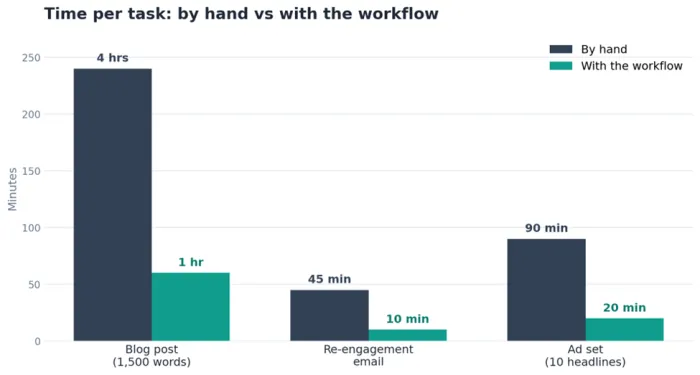
Numbers make the case better than adjectives.
| Task | By hand | With the workflow |
|---|---|---|
| 1,500-word blog post | ~4 hours | ~1 hour |
| Re-engagement email | ~45 minutes | ~10 minutes |
| Ad set of 10 headlines | ~90 minutes | ~20 minutes |
These aren't magic figures. They come from the same pattern in every format: the model removes the blank-page stall and the mechanical drafting, while you keep the parts that need a human. Independent analysis of AI marketing workflows reports similar jumps, with a task like keyword research compressing from hours down to roughly thirty minutes once AI handles the first pass.
Multiply that across a two-person content team shipping twelve pieces a month and the maths gets loud. The reclaimed hours don't drain into more meetings. They fund the research, the original angle, the sharper headline, the second draft that most calendars never have room for.
Two honest caveats sit behind these numbers. They assume you already know your audience well enough that the brief writes itself in a minute. They also assume you still edit, because an unedited AI draft published at speed costs more in reader trust than it ever saved you in time.
The recovered hours have a better use than pumping out more filler. Spend them on the strategy and on the one custom detail per piece that makes it worth reading. Speed buys you room to write something you're proud of.
Where redeepseek fits in all this
By now the method stands on its own. The tool's job is to run the two stages where speed matters most, the draft and the variation-heavy work from the ad section.
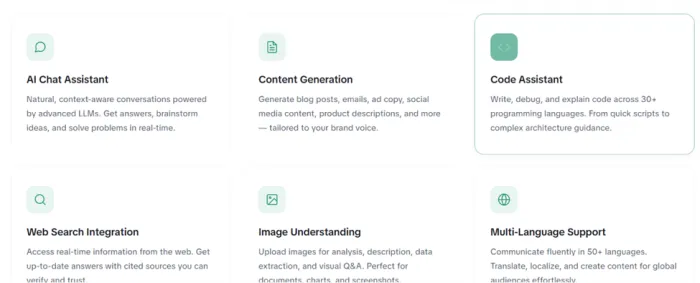
In practice it stretches past the formats this article walks through. Product descriptions, landing-page sections, social captions, cold-outreach openers all run on the same four stages. The workflow never changes by format. Only the brief does.
What it does well is fast, structured first drafts across formats, plus the high-volume variation that ad testing needs. What it won't do is supply your point of view or your private data. That's the refine stage, and the refine stage stays yours.
Used this way, the tool sits inside the workflow instead of trying to replace it. You bring the brief and the judgment; it brings the speed; the four-step sequence from earlier holds the two together.
Start with one piece
Don't rebuild your whole content operation this week. Pick the next thing on your calendar, a single blog post or one email, and run it through the four stages once. Time yourself while you do it.
Keep the receipts. Note the clock before and after, plus the one edit that made the draft feel like yours. Two data points is enough to know whether this earns a permanent slot in your week.
The gap between the old way and this one shows up on the first try, inside the first ten minutes, and that gap is why the method sticks.